
Tumour Surgery in Dogs and Cats in Basel
In brief
Tumour surgery in dogs and cats: which tumours are operated on, which form of surgery is indicated and when – and why the first operation is the decisive opportunity.
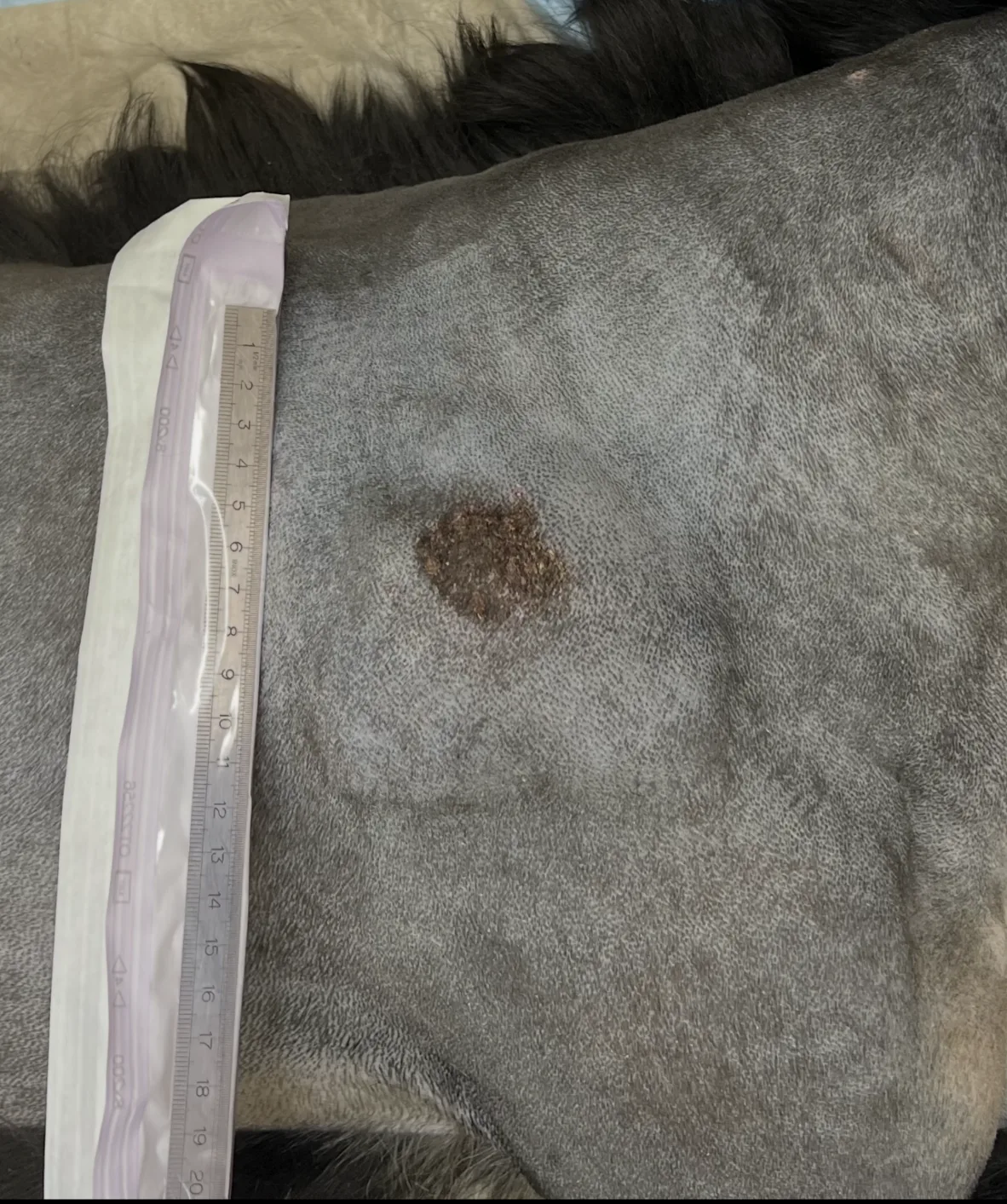
Cancer is one of the most common diseases in dogs and cats. In many cases, surgery is the most important and effective form of treatment – whether for diagnosis, to improve and prolong quality of life, or with curative intent. A specialist vet can make a decisive difference to the prognosis and quality of life of affected animals.
This article provides an evidence-based overview of the role of surgery in tumour conditions in dogs and cats.
Common Tumours in Which Surgery Plays a Central Role
Mast Cell Tumour
Mast cell tumour is one of the most common malignant skin tumours in dogs. Epidemiological studies show it accounts for a significant proportion of all skin tumours. Surgical removal is the most important component of treatment. Success depends critically on complete tumour excision. Depending on biological behaviour, surgery alone may be sufficient, or it may be supplemented by additional therapies (chemotherapy, radiation therapy or others).
Soft Tissue Sarcomas
Soft tissue sarcomas are a heterogeneous group of tumours that typically grow locally invasively and carry a variable risk of metastasis. They account for approximately 8–15% of skin and subcutaneous tumours in dogs and 7–18% in cats, depending on the study. Surgery is again the central therapy. Due to microscopic tumour extensions, generous resection margins are essential for local tumour control.
Other Commonly Surgically Treated Tumours
- Mammary tumours (mammary carcinoma)
- Squamous cell carcinomas
- Oral tumours (oral cavity)
- Anal sac tumours (carcinoma)
- Splenic tumours
Whether surgery is appropriate depends on tumour type, stage, location, the patient’s general condition and the goals of treatment.
Three Forms of Tumour Surgery
1) Diagnostic Surgery (Biopsy)
Biopsy is used for precise diagnosis and tumour characterisation.
- Incisional biopsy: removal of a portion of the tumour (for large or complex tumours)
- Excisional biopsy: complete removal of small tumours
A correctly planned biopsy is critical, as it influences the subsequent definitive surgery.
2) Palliative Surgery
Palliative operations do not aim for cure, but for improvement of quality of life, for example through:
- Reduction of pain
- Removal of ulcerated, bleeding or large tumours
- Decompression of organ structures or limbs
- Improvement of mobility or breathing through tumour removal
Particularly in advanced tumour disease, palliative surgery can achieve meaningful clinical improvement and prolonged quality of life.
3) Curative Tumour Surgery
Curative tumour surgery aims at complete tumour removal. For soft tissue sarcomas, wide resection margins are frequently recommended (e.g. 2–3 cm laterally and one deep fascial plane), although the optimal margins depend on tumour type and grade. For mast cell tumours, the surgical strategy depends on histological grade, location and metastatic risk.
A fundamental principle: The first operation is often the best chance of cure. Nothing should therefore be left to chance here.
Adjuvant Therapies After Surgery
Histopathology and Resection Margins
Histological examination in the laboratory is central to treatment planning. Incomplete resection margins increase the risk of recurrence.
Radiation Therapy
Radiation therapy is frequently used for incomplete tumour removal, non-resectable tumours or high recurrence risk.
Chemotherapy and Systemic Therapy
This is used for high metastatic risk, aggressive tumour types or systemic tumour disease.
Re-excision
In cases of incomplete resection margins, prompt re-excision can improve local tumour control.
Conclusion – Tumour Surgery in Animals in Basel
Surgical treatment is a central component of modern veterinary oncology. An individually planned tumour operation – combined with histopathological diagnostics and adjuvant therapies – offers the best chance of long-term control or cure for many tumours.
For pet owners in the Basel region, collaboration with a specialist vet is essential to ensure evidence-based, patient-centred treatment. Please feel free to get in touch.
Scientific references:
- Welle MM et al. Canine mast cell tumours: a review of the pathogenesis, clinical features, pathology and treatment. Vet Dermatol. 2008.
- Graf R et al. Swiss population-based study of cutaneous tumours in dogs. Vet Pathol. 2018.
- Liptak JM, Forrest LJ. Soft tissue sarcomas in dogs and cats. Vet Clin North Am Small Anim Pract. 2013.
- Bray JP et al. Surgical margins in soft tissue sarcoma: current concepts. Vet Comp Oncol. 2022.
- Blackwood L et al. European consensus guidelines for mast cell tumours in dogs. Vet Comp Oncol. 2012.