
My Dog Is Not Bearing Weight on a Leg – Is It an Emergency?
In brief
Your dog is not putting weight on a leg? Find out when lameness is a genuine emergency – and when it is not. With clear warning signs for dog owners.
Your dog or cat has suddenly stopped bearing full weight on a leg. They are limping, sparing the limb, or barely touching the ground – and you are wondering: do we need to go to the emergency vet right now?
That concern is entirely understandable. The good news first: in the vast majority of cases, lameness on its own is not an emergency.
When Lameness Is Not an Emergency
A dog that is not fully bearing weight on a leg but is otherwise behaving normally – eating, drinking, breathing calmly, responsive and able to move – needs a veterinary assessment, but as a rule does not need a late-night trip to the emergency clinic.
A careful orthopaedic examination within the next one to two days is the right approach – and often a better one: your dog will be examined more calmly and thoroughly than is typically possible in an emergency setting.
The most important thing during this period is rest. No running, no going up stairs without help, no off-lead exercise. Any uncontrolled movement can worsen existing damage – for example inside the stifle joint.
When You Must Not Wait
There are clear warning signs that make your dog a genuine emergency. Take your dog immediately to an emergency vet if, in addition to lameness, one or more of the following signs are present:
- Laboured or difficult breathing – rapid, effortful or noisy respiration.
- Bleeding or open wounds on the affected limb or body.
- Inability to move – your dog is not moving one or more limbs at all, or cannot get up.
- Altered consciousness – drowsiness, disorientation, unresponsiveness or unusual behaviour.
These signs can indicate an injury or condition that goes beyond the musculoskeletal system. In these situations, please seek an emergency vet in the Basel region. Information can be found at: notfalltierarzt.ch
The Most Common Cause Behind Persistent Hindlimb Lameness
If your dog suddenly or progressively stops bearing full weight on a hind leg, the same underlying cause is very often responsible: a cruciate ligament rupture. It is the most common orthopaedic condition in dogs – and it affects far more than just large breeds.
The insidious aspect: in dogs, cruciate ligament rupture usually does not begin with a dramatic accident, but gradually. Left untreated, what starts as an intermittent lameness that fluctuates in severity develops into progressive joint damage.
What this means for your dog – and why TPLO surgery reliably returns them to pain-free movement – is explained in our article: Cruciate Ligament Rupture in Dogs and TPLO Surgery.
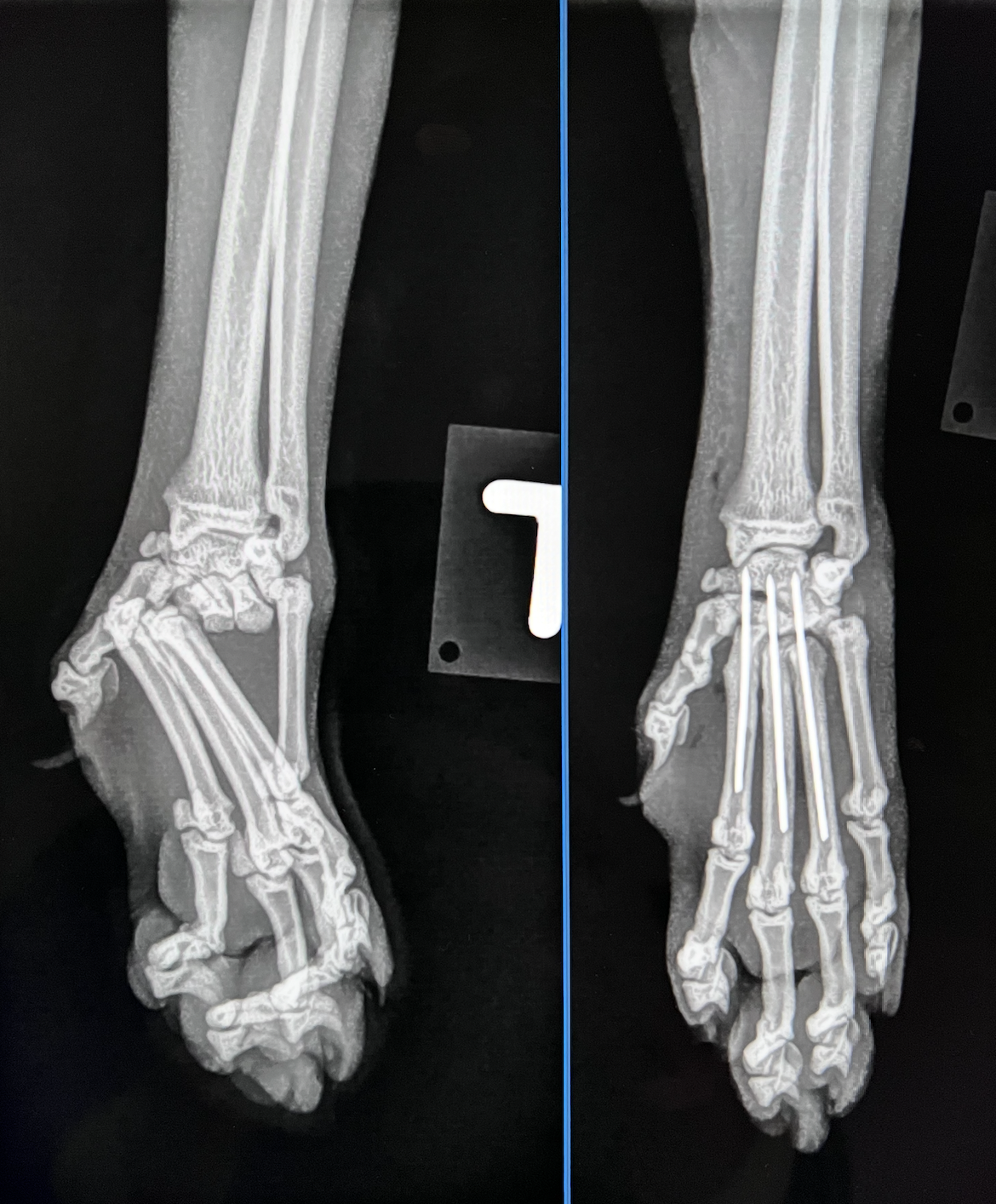
Acute lameness can indicate a fracture – these always require orthopaedic management.
Your Next Step
If your dog has not been bearing weight properly for more than one to two days, you should have the cause assessed by a specialist – before a small problem becomes a large one. The earlier the diagnosis, the less invasive and more successful the treatment. If lameness or surgery is a concern, feel free to contact us.